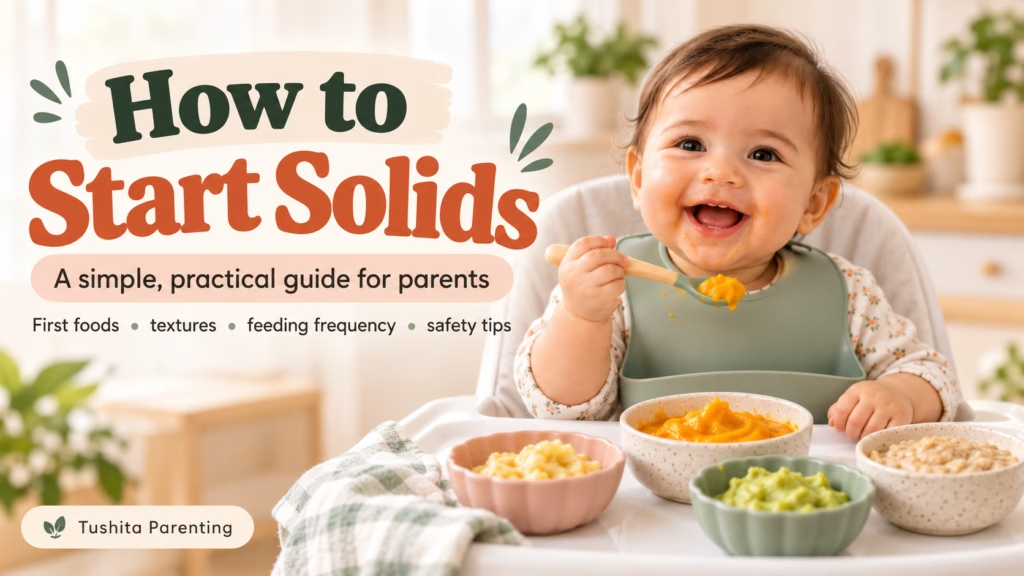


How to Start Solids: Baby’s First Foods & Feeding Guide
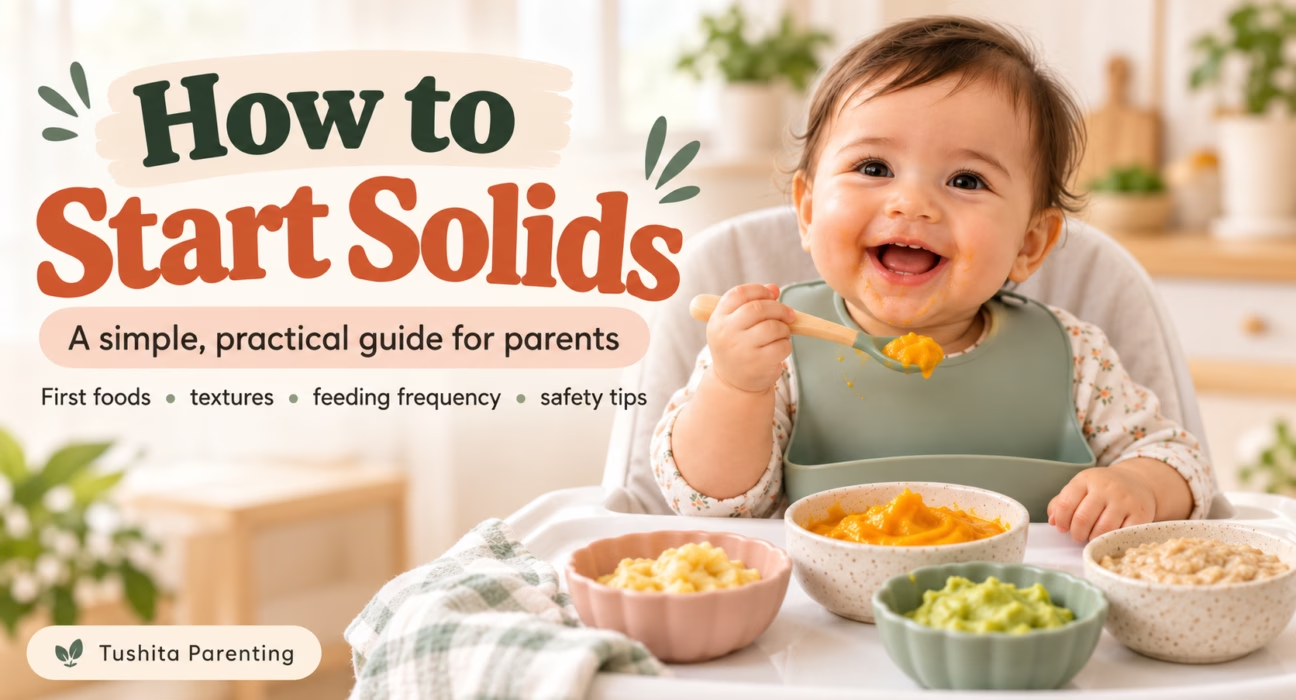
How to Start Solids: A Simple, Practical Guide for Parents
A Complete Guide to Baby’s First Foods, Feeding Schedule, Textures & Safety
Starting solids is one of the most exciting milestones in your baby’s first year. But for new parents, it also brings plenty of questions. How to Start Solids? When should you begin? Which foods are best? How much should your baby eat? If you’re wondering how to start solids safely, this practical guide covers everything from signs of readiness to first food choices, feeding frequency, and important safety rules.
Introducing solid foods, also known as complementary feeding, is about much more than filling your baby’s tummy. It helps babies explore new flavours, learn different textures, and gradually develop their feeding skills.
At Tushita Parenting, we believe that every little milestone deserves patience, love, and the right information.
1. When to Start Solids for Your Baby
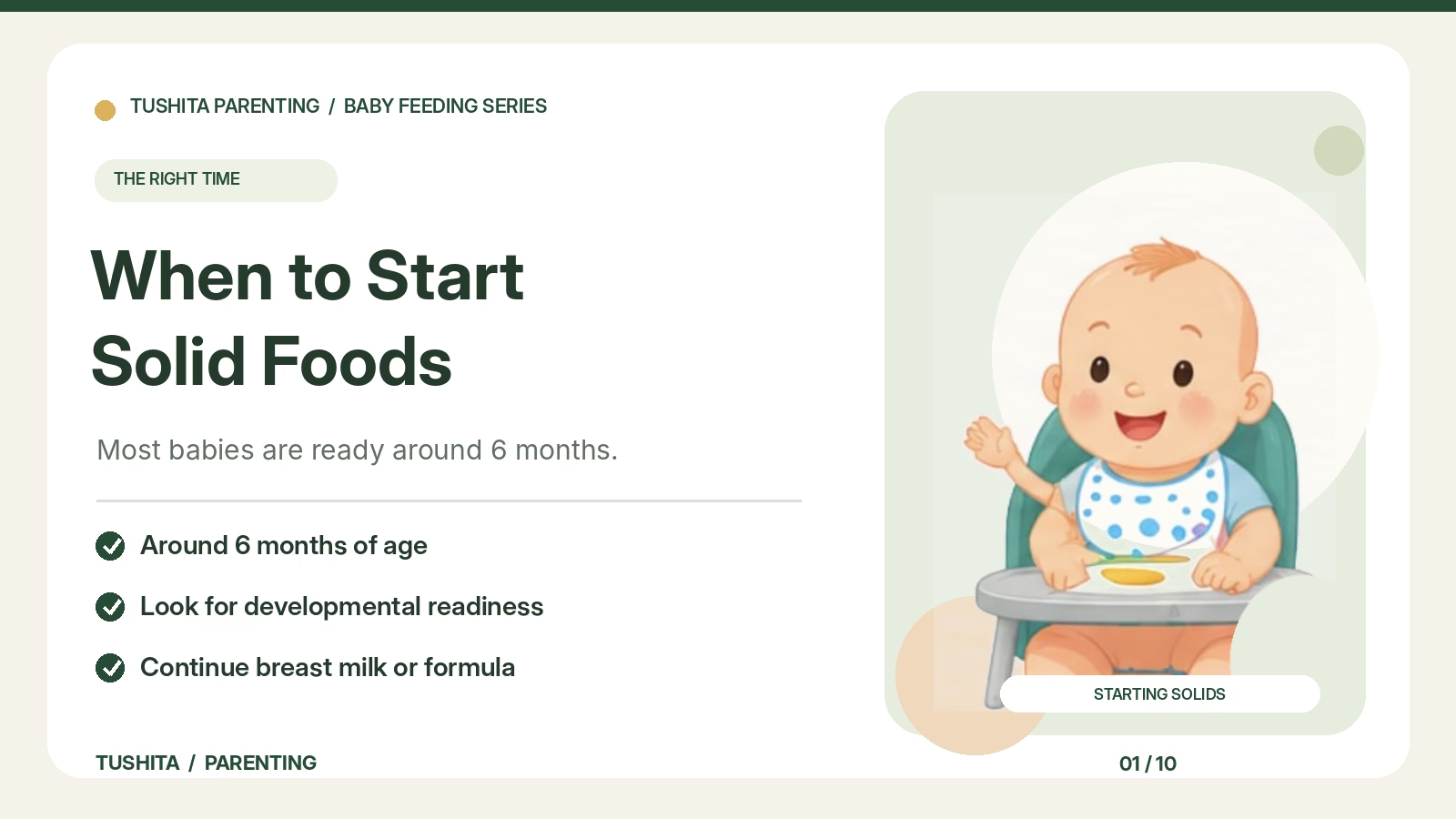
The Right Age to Introduce Solid Foods
Most babies are ready to start solids around 6 months of age.
According to global recommendations:
- Exclusive breastfeeding or formula feeding for approximately the first 6 months.
- Introduce solid foods around 6 months, when your baby shows developmental readiness.
- Continue breastfeeding or formula feeding alongside solids to support nutritional needs.
Starting complementary feeding too early or too late can affect your baby’s feeding development and nutrition.
Breast milk or infant formula continues to provide important nutrition while your baby gradually learns to eat a variety of foods.
Parenting Tip: Don’t rush into solids simply because your baby has reached a certain age. Look for developmental readiness, too.
2. Signs Your Baby Is Ready for Solid Foods
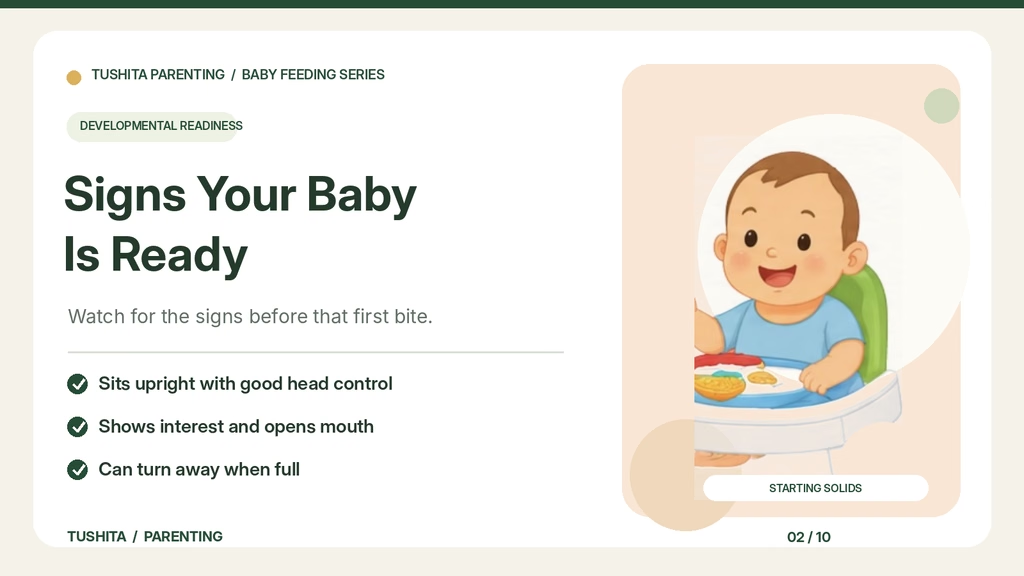
How to Start Solids: Recognising Developmental Readiness
Every baby develops at their own pace. Around 6 months, look for these important signs:
- Can sit up with little or no support: Your baby can maintain an upright position during feeding.
- Good head and neck control: Your baby can hold their head steady.
- Shows interest in food: Your baby appears curious when others are eating.
- Opens mouth when offered food: A sign of willingness to explore new tastes.
- Can turn head away to show fullness: Your baby begins communicating when they don’t want more food.
- Tongue-thrust reflex has reduced: Your baby can move food backwards in the mouth rather than automatically pushing it out.
If most of these signs are present, your baby may be ready to begin complementary feeding.
Parenting Tip: Readiness involves several developmental abilities working together. If you’re unsure, discuss your baby’s feeding readiness with your paediatrician.
3. How Much Solid Food Should You Start With?
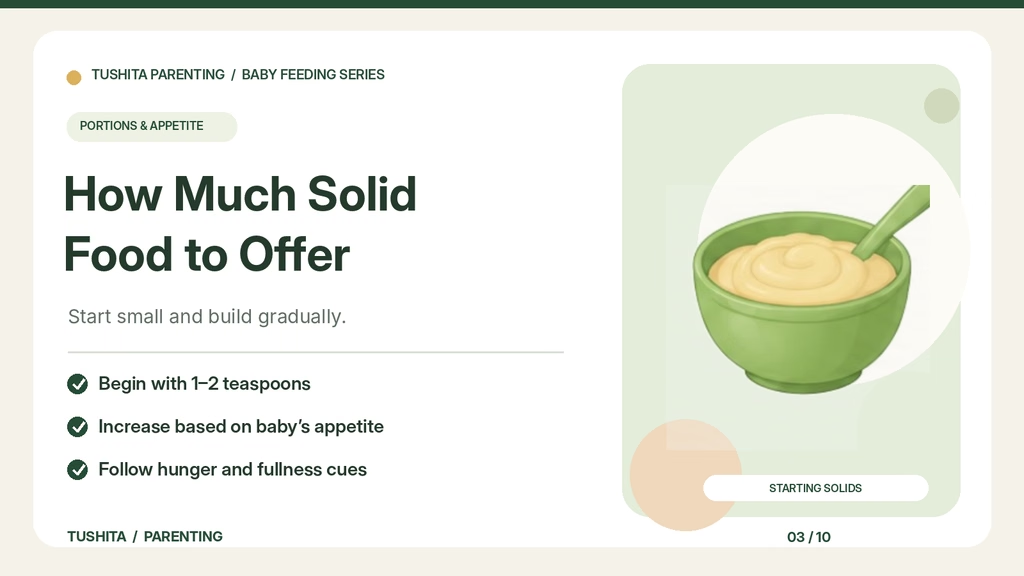
Start Small and Build Gradually
When you’re learning how to start solids, remember that the first few feeding experiences are about exploring food, not finishing a full meal.
The reference feeding guide recommends:
- Begin with 1–2 teaspoons of food.
- Slowly increase quantities based on your baby’s appetite.
- Around 6+ months: Introduce small tastes once a day.
- Around 7+ months: Increase the frequency and quantity of food.
These are introductory steps, not fixed portion limits or a complete feeding schedule.
Important: Breast milk or infant formula continues to be an important source of nutrition during the early complementary feeding stage.
As your baby grows, complementary foods become increasingly important for meeting energy and nutrient requirements.
Parenting Tip: Never pressure your baby to finish a bowl. Follow their hunger and fullness cues.
4. Why Food Texture Matters When Starting Solids
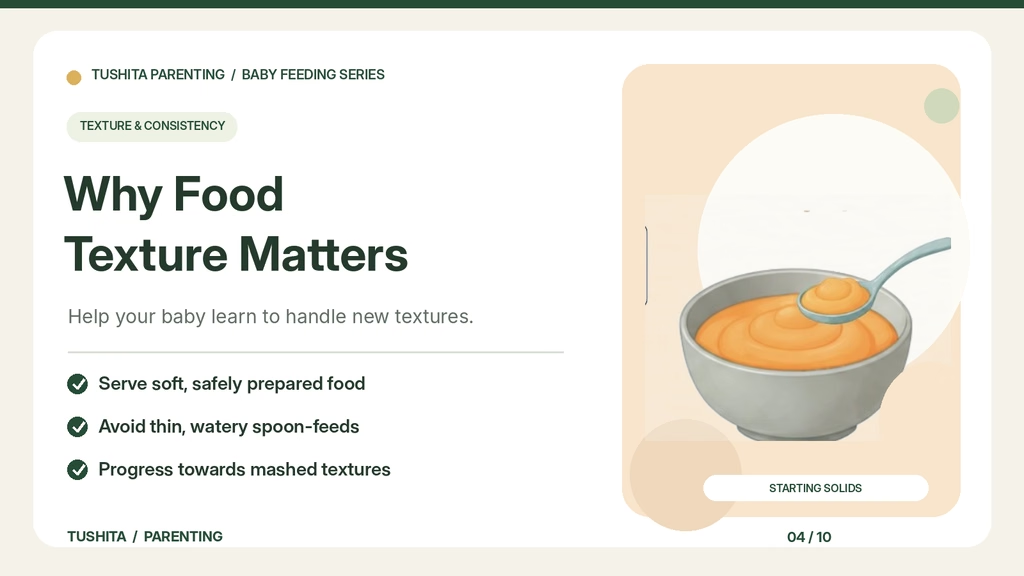
Choose the Right Consistency for Your Baby
Food texture plays an important role in developing feeding and chewing skills.
The reference guide highlights these texture principles:
- Thin, pencil-width, soft and squishy: For appropriately prepared finger foods rather than firm, large chunks.
- Not watery: Spoon-fed foods should have enough consistency to stay on the spoon.
- Gradually move to mashed textures: Introduce different consistencies as your baby develops.
Babies can begin with smooth, mashed or pureed foods, and progress to thicker, lumpier textures and suitable finger foods as their skills develop.
Remember that the ideal shape and size of finger foods depend on a baby’s developmental stage and the particular food. Pencil-width pieces are not a universal safety rule.
Parenting Tip: As your baby develops, progress textures gradually without rushing. Always prepare foods to minimise choking risks.
5. Baby Feeding Frequency: From First Tastes to Regular Meals
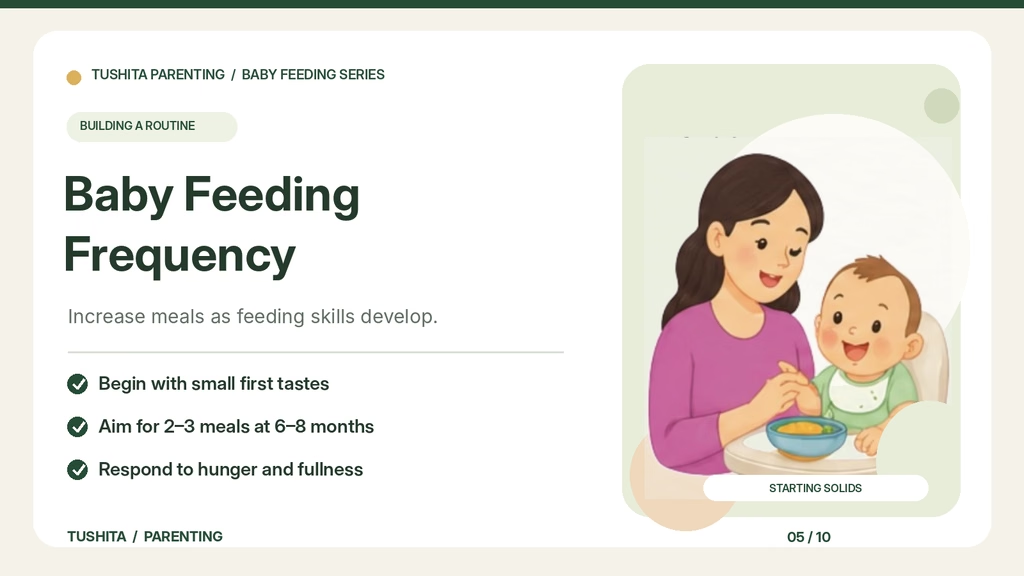
A Simple Feeding Progression
The reference guide suggests this introductory progression:
- First few weeks: 1 meal per day.
- Then: Increase to 2 meals per day.
- Around 7+ months: 2 meals + 1 snack, if your baby is ready.
Always follow your baby’s hunger and fullness cues.
Understanding Recommended Feeding Frequency
The World Health Organization recommends moving towards:
| Baby’s age | Complementary feeding frequency |
|---|---|
| 6–8 months | 2–3 meals per day |
| 9–23 months | 3–4 meals per day |
| As needed | 1–2 additional nutritious snacks |
The one-meal approach in the reference is an initial tasting phase rather than a long-term goal. Individual feeding schedules can vary, particularly for babies who are not breastfed.
Parenting Tip: Focus on nutritious meals, age-appropriate frequency, and responsive feeding rather than following a rigid timetable.
6. First Foods to Offer Your Baby
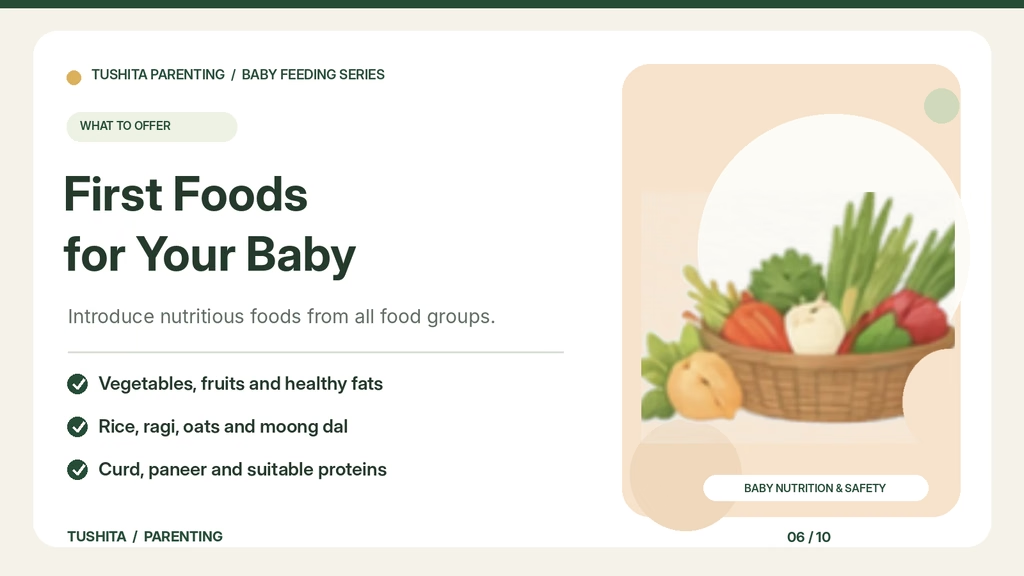
Introduce a Variety of Foods from Different Food Groups
One of the biggest questions parents ask when learning how to start solids is: What should my baby eat first?
There is no single compulsory order for introducing different food groups. The aim is to offer a variety of safe, nutritious, age-appropriate foods.
Here are the food choices from the reference guide.
Vegetables & Fruits
Vegetables:
- Carrot
- Pumpkin
- Sweet potato
Fruits:
- Apple
- Banana
- Pear
Offer these cooked, mashed, pureed, or otherwise appropriately prepared depending on your baby’s abilities.
Healthy Fats
- Ghee
- Coconut oil
- Avocado
Healthy fats can be included as part of a balanced diet.
Carbohydrates
- Rice
- Ragi
- Oats
These grains can be prepared as soft porridges or other age-appropriate textures.
Protein (Meat/Fish/Beans)
- Moong dal
- Well-cooked lentils
- Egg yolk (if preferred)
Protein foods are important as your baby begins eating a wider variety of foods.
The reference specifically lists egg yolk. Current feeding guidance also allows appropriately cooked whole egg from around 6 months, unless individual medical advice indicates otherwise.
Dairy (If Suitable)
- Curd
- Paneer
Choose suitable pasteurised, unsweetened dairy foods and prepare them in an age-appropriate texture.
Parenting Tip: Include iron-rich foods, protein sources, vegetables, fruits, and grains as your baby’s diet expands.
7. Expanded Baby Food Ideas for a Balanced Diet
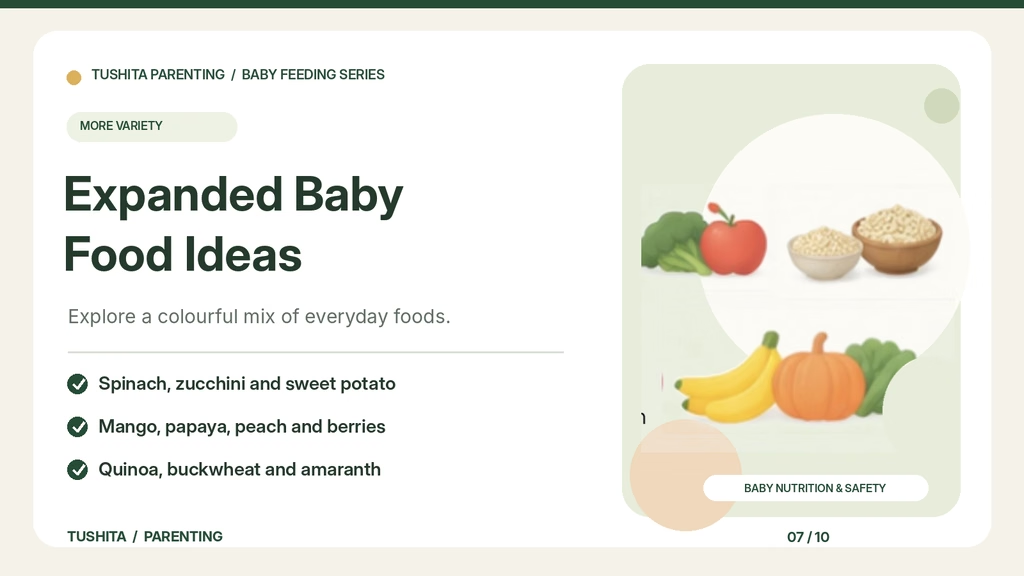
More Vegetables, Fruits, Grains and Healthy Fats
Once your baby becomes comfortable exploring different foods, you can gradually introduce more variety.
Here is the expanded food list from the reference material.
Vegetables
- Carrot
- Broccoli
- Spinach
- Zucchini
- Sweet potato
- Pumpkin
- Potato
Fruits
- Apple
- Banana
- Pear
- Mango
- Papaya
- Peach
- Blueberries
Healthy Fats
- Ghee
- Butter
- Coconut oil
- Olive oil
- Avocado
Carbs / Grains
- Rice
- Ragi
- Oats
- Quinoa
- Buckwheat
- Amaranth
These foods offer opportunities to introduce different flavours and textures while increasing dietary variety.
Remember to serve every food in a safe form for your baby’s age and chewing skills. For example, hard vegetables should be cooked until soft, while small round fruits such as blueberries must be prepared to reduce choking risk.
Parenting Tip: Offer variety across food groups rather than relying on only a few familiar foods.
8. Seasonings and Additions: What Is Safe for Babies?
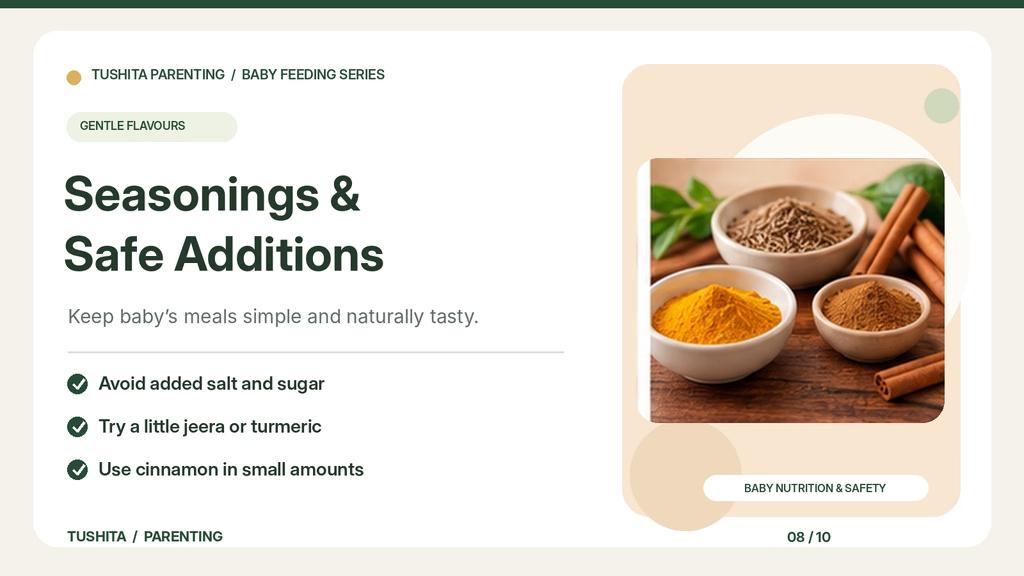
Keep Baby’s First Foods Simple and Safe
When introducing solids, the reference guide recommends:
No salt or sugar before 1 year.
In practical terms, avoid adding salt or sugar to your baby’s food. Naturally occurring sugars in fruits and other whole foods are different from added sugar.
Mild Natural Flavours You May Use
- Jeera powder
- Haldi (turmeric)
- Cinnamon (very small amounts)
These seasonings can introduce babies to the flavours commonly used in Indian home cooking without adding unnecessary salt or sugar.
Use small food-level amounts rather than concentrated spices or supplements.
Parenting Tip: Let your baby learn natural tastes first.
9. Important Feeding Rules Every Parent Should Know
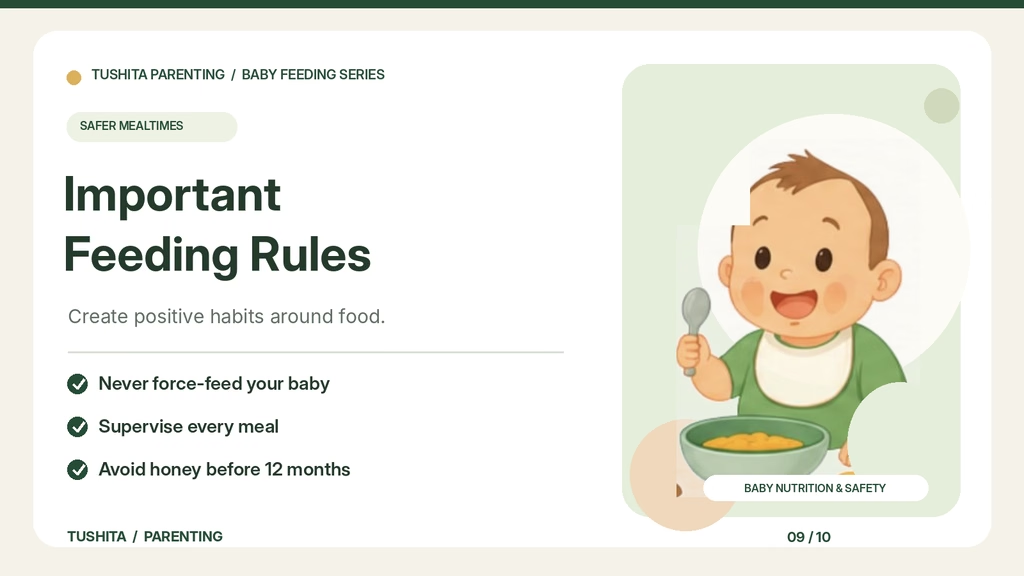
Building Healthy and Safe Feeding Habits
The reference guide highlights six important rules.
1. Never Force Feed
Allow your baby to decide how much they want to eat. Watch for signs of hunger and fullness.
2. Always Supervise Meals
Never leave your baby unattended while eating. Keep your baby seated upright in a suitable feeding chair.
3. Let Baby Explore Food
Allow your little one to experience different textures, smells and flavours.
4. Expect Mess — It’s Part of Learning
Food exploration can be messy, but touching and handling food can help babies develop their feeding skills.
5. One New Food at a Time
Introducing foods individually at first can help parents identify potential reactions. This is especially important when offering common allergens.
Do not unnecessarily delay introducing allergenic foods such as appropriately prepared egg or peanut once your baby is developmentally ready, unless your healthcare professional advises otherwise.
6. Avoid Honey Before 1 Year
Honey must not be given to babies younger than 12 months because of the risk of infant botulism.
Parenting Tip: Make mealtimes calm, positive, and interactive. Feeding should be a learning experience rather than a battle over quantities.
10. Common Mistakes Parents Should Avoid When Starting Solids
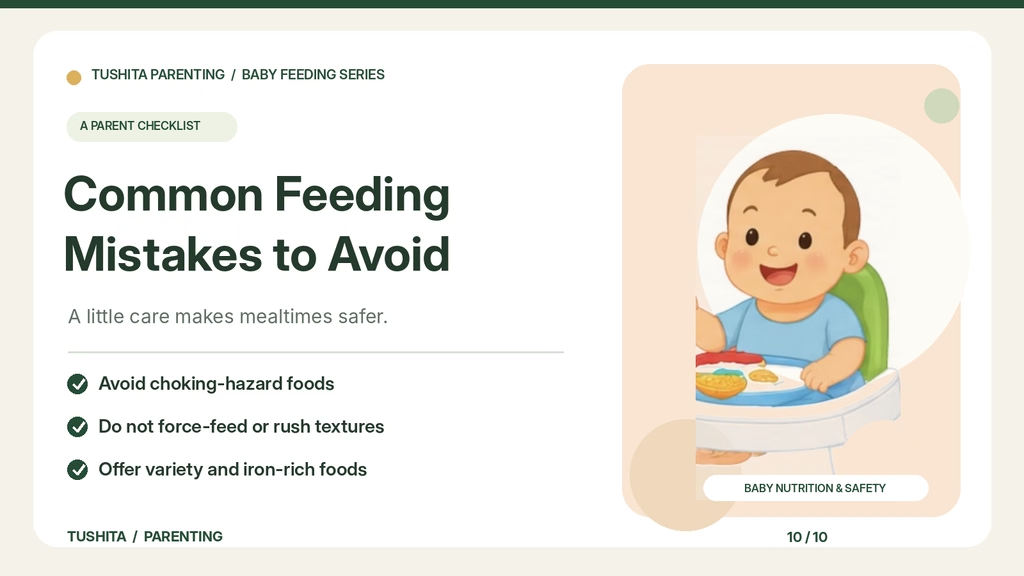
Understanding how to start solids also means knowing what to avoid.
Some common mistakes include:
- Introducing foods before your baby is developmentally ready.
- Offering textures or food shapes that create choking hazards.
- Continuing only watery or smooth purees without progressing textures as skills develop.
- Forcing your baby to eat more than they want.
- Adding unnecessary salt or sugar.
- Giving honey before 12 months.
- Offering too little dietary variety.
- Leaving a baby unsupervised while eating.
Parents should also avoid delaying iron-rich foods or common allergens without medical advice.
Every baby learns differently. Be patient, observe your baby’s progress, and consult your paediatrician when you have concerns.
Frequently Asked Questions About Starting Solids
Q1. What is the best age to start solid foods?
Most babies can begin solids around 6 months, provided they show signs of developmental readiness.
Q2. How much solid food should I give my 6-month-old baby?
The reference guide suggests starting with 1–2 teaspoons for initial tastes and increasing gradually. This is not a fixed daily limit. As feeding becomes established, age-appropriate meals and quantities should increase.
Q3. Can I give my baby dal, rice and ragi?
Yes. Well-cooked moong dal, rice and ragi are among the food options listed in this guide. Prepare them in suitable textures.
Q4. Can I add salt or sugar to baby food?
Avoid adding salt or sugar to food prepared for babies. Natural flavours such as mild jeera powder, turmeric and small amounts of cinnamon can be used.
Q5. Is it okay if my baby refuses solid food?
Food refusal can happen during the transition to solids. Avoid force-feeding and continue offering positive opportunities to explore foods. Persistent feeding difficulties should be discussed with your paediatrician.
Q6. Should I stop breast milk or formula after starting solids?
No. Breast milk or infant formula remains important alongside complementary foods throughout the first year.
Q7. What are safe first foods for Indian babies?
Age-appropriately prepared moong dal, rice, ragi, oats, pumpkin, carrots, sweet potato, banana, pear and curd are some options. A varied diet should also include appropriate iron-rich and protein-rich foods.
Final Thoughts: Starting Solids Is a Journey, Not a Race
Learning how to start solids is an important part of your baby’s development, but there is no need to turn every meal into a test.
Begin around 6 months when your baby is ready, introduce nutritious foods, gradually progress textures, and allow your baby to explore new flavours.
Some days your baby may eat enthusiastically. Other days they may only want a few bites.
Both can be part of learning.
The goal is to nurture healthy eating habits while making mealtimes comfortable and enjoyable.
At Tushita Parenting, we celebrate every little milestone, one tiny bite at a time.
Save this guide, share it with fellow parents, and follow Tushita for more baby-care tips, parenting experiences and family lifestyle inspiration.
Medical Disclaimer
This article is intended for general parenting education and reflects the supplied reference material alongside public-health guidance. It is not a personalised feeding plan. Babies born prematurely, those with swallowing difficulties, growth concerns, food allergies, or other medical conditions may need individual guidance from a qualified paediatrician or paediatric dietitian.
References
- World Health Organization – Infant and Young Child Feeding
- CDC – When, What and How to Introduce Solid Foods
- NHS – Your Baby’s First Solid Foods
- NHS – Foods to Avoid Giving Babies
Published by Tushita Parenting | Parenting • Baby Care • Family Lifestyle